
Skip to content
Book

The finance cabinet of curiosities

Tools change every century. Reconciliation never has.

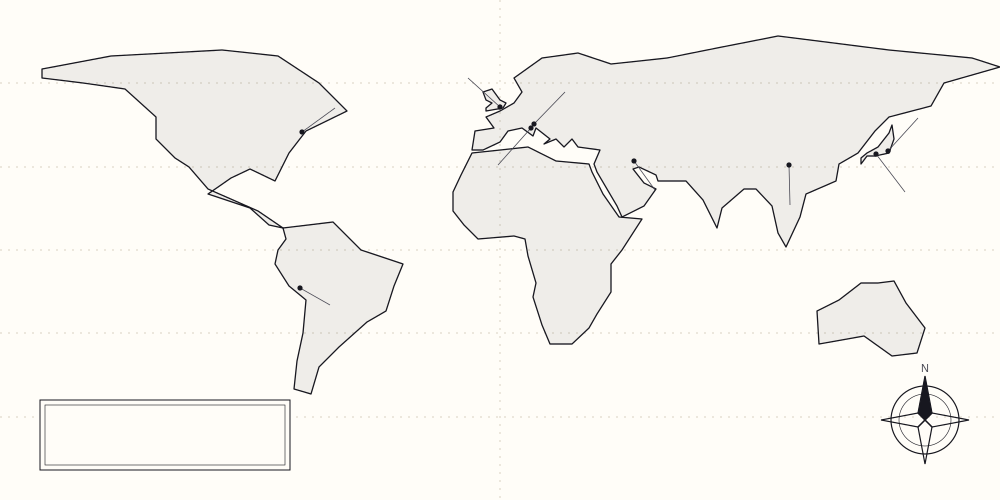
Nine objects, from Susa to the Apple II, that all served the same cause: keeping track of a debt, and being able to check it without taking anyone's word for it. Follow the routes on the map and open each piece: each one has become an ink artwork by Atelier Hikarius.

None of these objects has a “Sync” button. They worked anyway.

1 · The map

Nine objects, born along the trade routes.

Illustration 1 · Where the nine objects were born

Source: stylised map by Atelier Hikarius; outlines and routes are approximate.

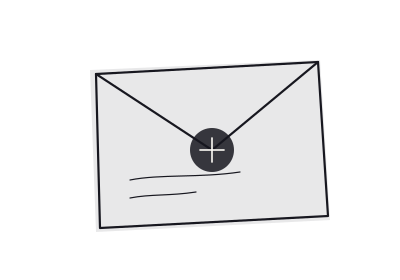
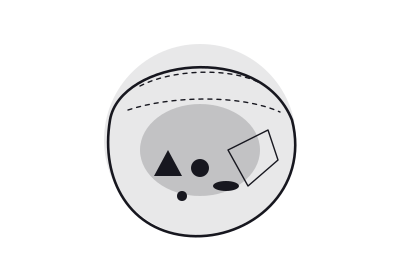
Artwork · The sealed envelope · ink, Atelier Hikarius, 2026

Piece 01 of 09

The clay envelope with tokens

Origin
Susa (today’s Iran)
Period
Uruk, 3500 to 3100 BCE
Purpose
Recording a transaction

A hollow clay ball, sealed around small tokens that stand for quantities. The seal rolled across its surface proves nobody has opened it. To know what was inside without breaking the ball, the shape of the tokens was pressed into it as well: for many historians, this is one of the paths that led to writing.

An integrity check, more than five thousand years before the first software.

Source: Musée du Louvre, Near Eastern Antiquities, Sb 1932.
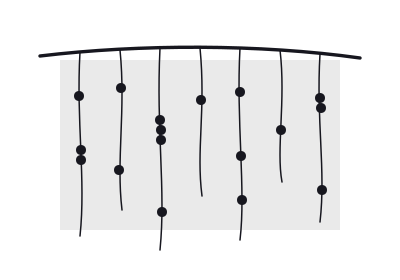
Artwork · Knotted cords · ink, Atelier Hikarius, 2026

Piece 02 of 09

The quipu

Origin
Inca Empire, Andes
Period
15th – 16th century
Purpose
Keeping the state’s accounts

Knotted cords hanging from a main cord. A knot’s position on the cord gives its value, units, tens, hundreds: a decimal system without a single written digit. Specialists, the quipucamayoc, kept censuses, tributes and stocks this way.

A chart of accounts that fits in one hand. Some workbooks cannot say as much.

Source: Marcia and Robert Ascher, Code of the Quipu, 1981.

Tallied

Artwork · The two halves · ink, Atelier Hikarius, 2026

Piece 03 of 09

Tally sticks

Origin
English Exchequer
Period
12th century – 1826
Purpose
Proving a tax payment

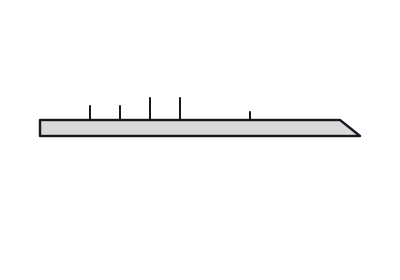
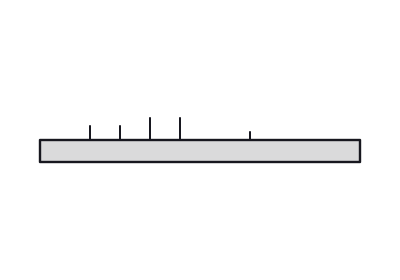
A stick of wood, often willow, notched for the amount, then split in two: the taxpayer kept one half, the Exchequer the other. At settlement the two were put back together. If the notches matched, the account “tallied”. If not, someone had cheated.

In 1834, two cartloads of sticks were burned in Parliament’s furnaces, and the Palace of Westminster with them. Since then, we archive.

Source: UK Parliament, Living Heritage, “Tally sticks”; notches in the artwork are fictitious.

Artwork · Pay in Bruges · ink, Atelier Hikarius, 2026

Piece 04 of 09

The bill of exchange

Origin
Italian merchants
Period
from the 13th century
Purpose
Paying far away, without cash

A Florentine merchant pays florins to his banker, who writes to his correspondent in Bruges: “pay this sum, in local money, on this date”. The money travels as a letter, and the exchange happens on the way. In France it still lives in the Commercial Code, and in paperless form as the LCR.

Source: French Commercial Code, articles L511-1 and following.

Artwork · The Chengdu note · ink, Atelier Hikarius, 2026

Piece 05 of 09

The jiaozi 交子

Origin
Chengdu, Sichuan
Date
1024
Purpose
Replacing iron coinage

In Sichuan, money was made of iron, and a thousand coins weighed a lot. Merchants issued deposit notes; in 1024 the Song dynasty took over their issue. It is the first paper money issued by a state. Several seals, in several inks, protected each note against forgers.

Inflation arrived with the banknote, the day more were issued than the reserve covered.

Source: historiography of Song currency; the millennium was celebrated in China in 2024.

Artwork · The open ledger · ink, Atelier Hikarius, 2026

Piece 06 of 09

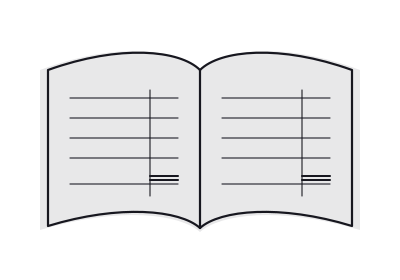
Pacioli’s Summa

Origin
Venice
Date
1494
Purpose
Teaching double entry

The friar and mathematician Luca Pacioli did not invent double-entry bookkeeping: Venetian merchants already used it. But he was the first to print it, in a treatise within his Summa de arithmetica. Every transaction is entered twice, as a debit to one account and a credit to another: one gap, and the error gives itself away.

Source: Luca Pacioli, Summa de arithmetica, geometria, proportioni et proportionalità, Venice, 1494.

Artwork · The beads · ink, Atelier Hikarius, 2026

Piece 07 of 09

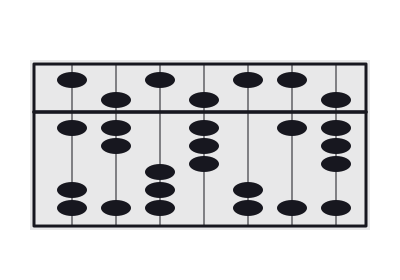
The soroban 算盤

Origin
Japan, from China
Current form
1930s
Purpose
Calculating fast, and right

Heir to the Chinese suanpan, the Japanese abacus slimmed down over the centuries to its present form: one five-bead on top, four one-beads below, nothing superfluous. Each rod holds a digit from 0 to 9. It is still taught in Japanese schools.

It never crashes and never needs an update. You only have to know how to use it.

Source: nippon.com, “The Abacus in Japan”.

Artwork · The seal and its print · ink, Atelier Hikarius, 2026

Piece 08 of 09

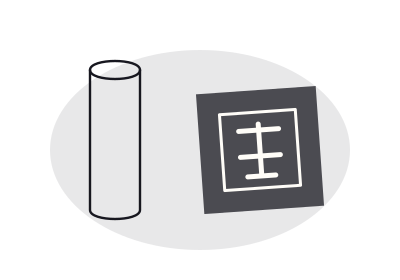
The hanko 判子

Origin
Japan, from China
Reform
2020
Purpose
Signing, committing, approving

In Japan you do not sign, you seal: contracts, invoices and expense claims carry the vermilion print of a personal seal, sometimes registered at the town hall. In 2020 the government decided to drop it from the vast majority of administrative procedures, in the name of going paperless.

The vermilion seal of our offers follows the same rule: it signs, it does not decorate.

Source: The Japan Times, November 2020.

Artwork · The first grid · ink, Atelier Hikarius, 2026

Piece 09 of 09

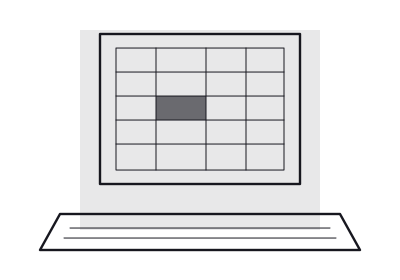
VisiCalc

Origin
Cambridge, Massachusetts
Date
1979
Purpose
The first spreadsheet

The first spreadsheet for a personal computer, designed by Dan Bricklin and Bob Frankston, on the Apple II. Change one cell and the whole sheet recalculates: what took a day in pencil took a second. Many companies bought an Apple II for it alone.

The 2003 macro nobody dares open any more descends from the same line.

Source: Dan Bricklin, bricklin.com, “VisiCalc”.

2 · Leaving the cabinet

Nine objects, one discipline: record, reconcile, sign.

  • Each piece keeps track of a claim, whether in clay, cord, wood or paper.

  • Each piece lets you check without trusting: the unbroken seal, the matching notches, debit equal to credit.

  • Today the ERP and AI take over. The question stays the same: who set the rule, and who signs off the gap?

Your tools have changed. Have your controls kept up?

The Satori audit looks at how your finance function records, reconciles and signs off in your ERP. Thirty minutes to talk it through.

Work · Wash · ink, Atelier Hikarius, 2026